Dry Needling in Geelong: Benefits, What to Expect & How It Can Help You Move Better
If you've been struggling with stubborn muscle tightness, recurring pain, or an injury that just won't settle, you've probably heard about dry needling. At The Manx Myotherapy in Geelong, it's one of the most effective tools we use alongside hands-on treatment and rehabilitation exercises to help people get back to doing what they love.
Whether you're a runner preparing for the Geelong Running Festival, an office worker with persistent neck pain, or someone dealing with long-term back or shoulder discomfort, dry needling may be able to help.
What is Dry Needling?
Dry needling is a treatment technique that uses very fine, sterile needles inserted into tight muscles and trigger points (commonly called "muscle knots").
Unlike injections, nothing is injected into the body—the needle itself is used to stimulate the muscle and nervous system.
The aim is to:
Reduce muscle tension
Decrease pain
Improve movement
Restore normal muscle function
Help you progress with your rehabilitation
Research suggests dry needling can provide short-term pain relief, particularly when combined with exercise and other physical therapy treatments rather than being used on its own. (PubMed)
How Does Dry Needling Work?
Painful muscles often become overactive, tight and sensitive.
By inserting a needle into these areas, dry needling may:
Reduce muscle guarding
Produce a local twitch response (a brief muscle contraction)
Improve blood flow
Reduce sensitivity within the nervous system
Allow muscles to relax and move more freely
Many patients notice that they feel looser and move with less discomfort immediately after treatment.
What Conditions Can Dry Needling Help?
At The Manx Myotherapy, dry needling is commonly used to help manage:
Neck Pain
Whether from desk work, poor posture or stress, dry needling can reduce tightness in muscles such as the upper trapezius, levator scapulae and neck extensors.
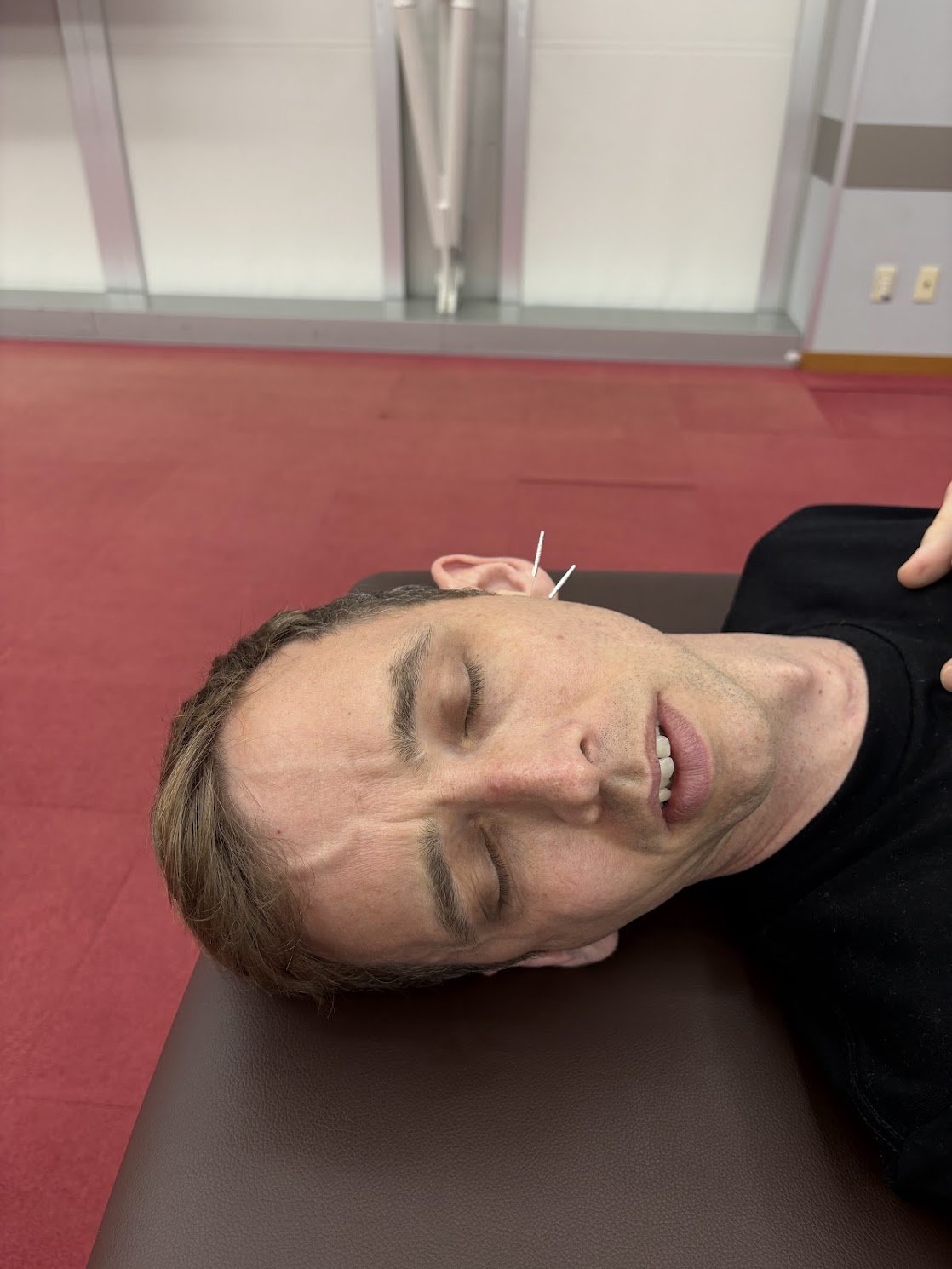
Dry needling for the jaw.
Shoulder Pain
Helpful alongside rehabilitation for rotator cuff pain, shoulder impingement and reduced overhead movement.
Headaches
Tension headaches are frequently linked with trigger points in the neck and upper back.
Low Back Pain
Persistent tightness around the lumbar spine, glutes and hips can often respond well when dry needling is combined with strengthening exercises.
Hip & Glute Pain
Useful for gluteal tendinopathy, piriformis-related pain and tight hip musculature.
Sports Injuries
Athletes often benefit from dry needling during recovery from muscle strains, calf tightness, hamstring injuries and overuse problems.
Running Injuries
Many runners in Geelong and the Bellarine Peninsula use dry needling as part of treatment for:
Plantar fasciitis
Achilles pain
Shin splints
ITB syndrome
Calf tightness
Hamstring injuries
Does Dry Needling Hurt?
This is probably the most common question.
Most people are surprised by how comfortable it is.
You may experience:
A small pinprick as the needle enters
A brief muscle twitch
A dull ache lasting a few seconds
Some muscles are more sensitive than others, but treatment should always be tolerable.
It's also completely normal to feel like you've done a hard gym session for 24-48 hours afterwards.
Is Dry Needling the Same as Acupuncture?
Although both use similar needles, they're very different treatments.
Dry Needling
Based on modern anatomy and pain science
Targets muscles and trigger points
Aims to improve movement and reduce muscular pain
Acupuncture
Based on Traditional Chinese Medicine
Uses meridians and energy pathways
Often used for a broader range of health conditions
Is There Good Evidence for Dry Needling?
Current research suggests dry needling can be effective for reducing musculoskeletal pain in the short term, particularly when combined with exercise and manual therapy. However, evidence for long-term benefits is less certain, which is why it is best viewed as one part of a comprehensive rehabilitation plan rather than a standalone solution. (PubMed)
At The Manx Myotherapy, dry needling is never used in isolation.
Instead, your treatment may include:
Myotherapy
Deep tissue massage
Joint mobilisation
Rehabilitation exercises
Strength programming
Load management advice
Education about your injury
This combination aims not only to reduce pain but also to address why the problem developed in the first place.
What Should You Do After Dry Needling?
Following treatment we usually recommend:
Drink plenty of water
Keep moving with light activity
Avoid heavy training for the rest of the day if possible
Perform any prescribed rehabilitation exercises
Most soreness settles within one to two days.
Why Choose The Manx Myotherapy in Geelong?
At The Manx Myotherapy, dry needling isn't just about temporarily relieving pain.
Every assessment looks at:
Why your pain developed
Your movement patterns
Muscle strength
Training loads
Work demands
Long-term recovery
The goal is to help you return to work, sport and everyday life with confidence—not just feel better for a day or two.
Whether you're dealing with neck pain after long hours at a desk, recovering from a running injury, or managing persistent muscle tightness, we'll create a personalised treatment plan that fits your goals.
Book Your Dry Needling Appointment in Geelong
If you're looking for dry needling in Geelong, myotherapy in Geelong, or treatment for sports injuries across Geelong and the Bellarine Peninsula, The Manx Myotherapy can help.
Located inside Empowered Health in Geelong, we provide evidence-informed treatment using dry needling, myotherapy, remedial massage and exercise rehabilitation to help you move with less pain and greater confidence.
Ready to get started? Book your appointment today and let's work towards lasting results—not just temporary relief.
Treating Myofascial Pain with Dry Needling: A Systematic Review (2023)
PubMed – Treating Myofascial Pain with Dry Needling: A Systematic Review